A bonus Sweat the Details podcast!
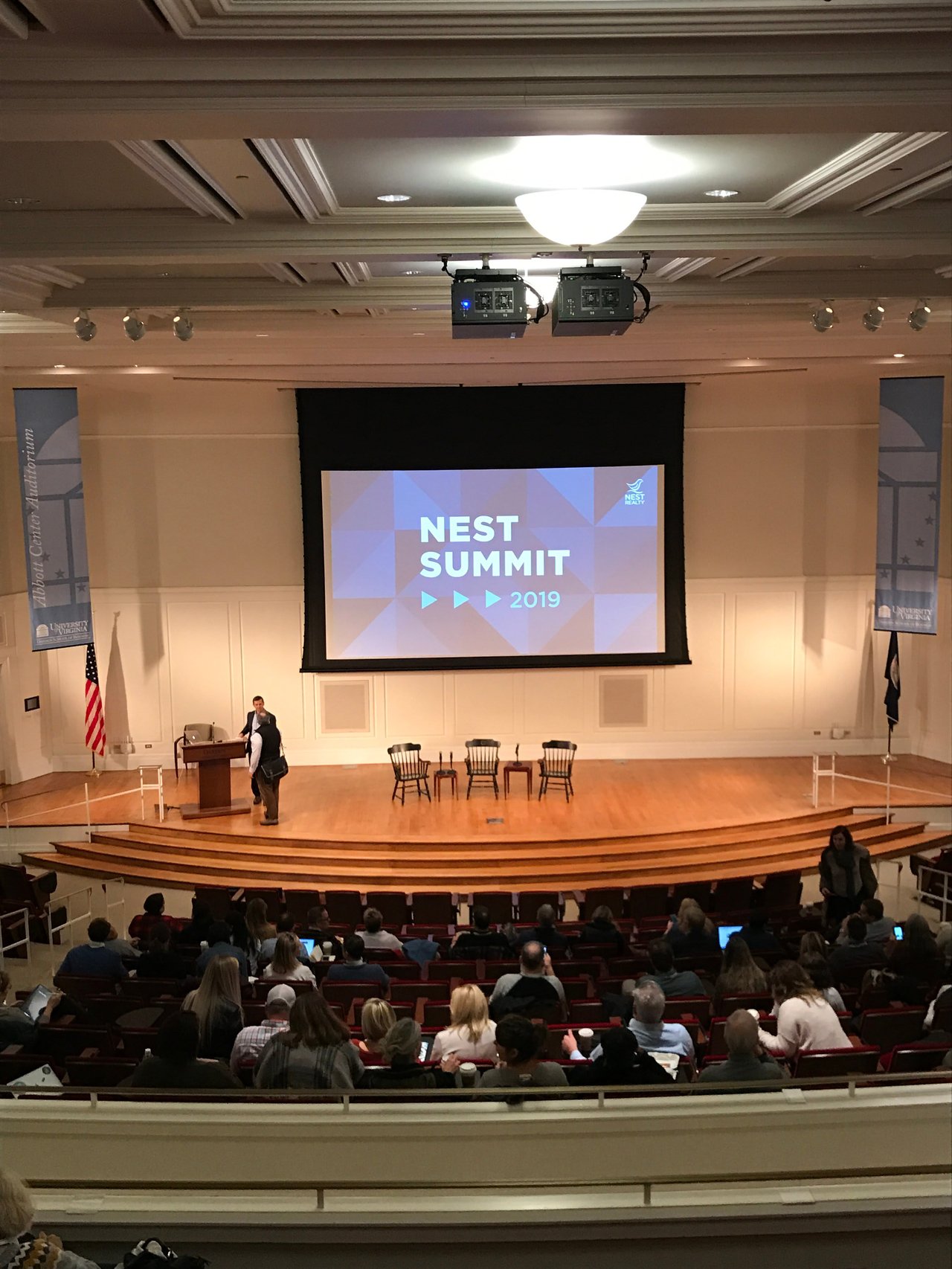
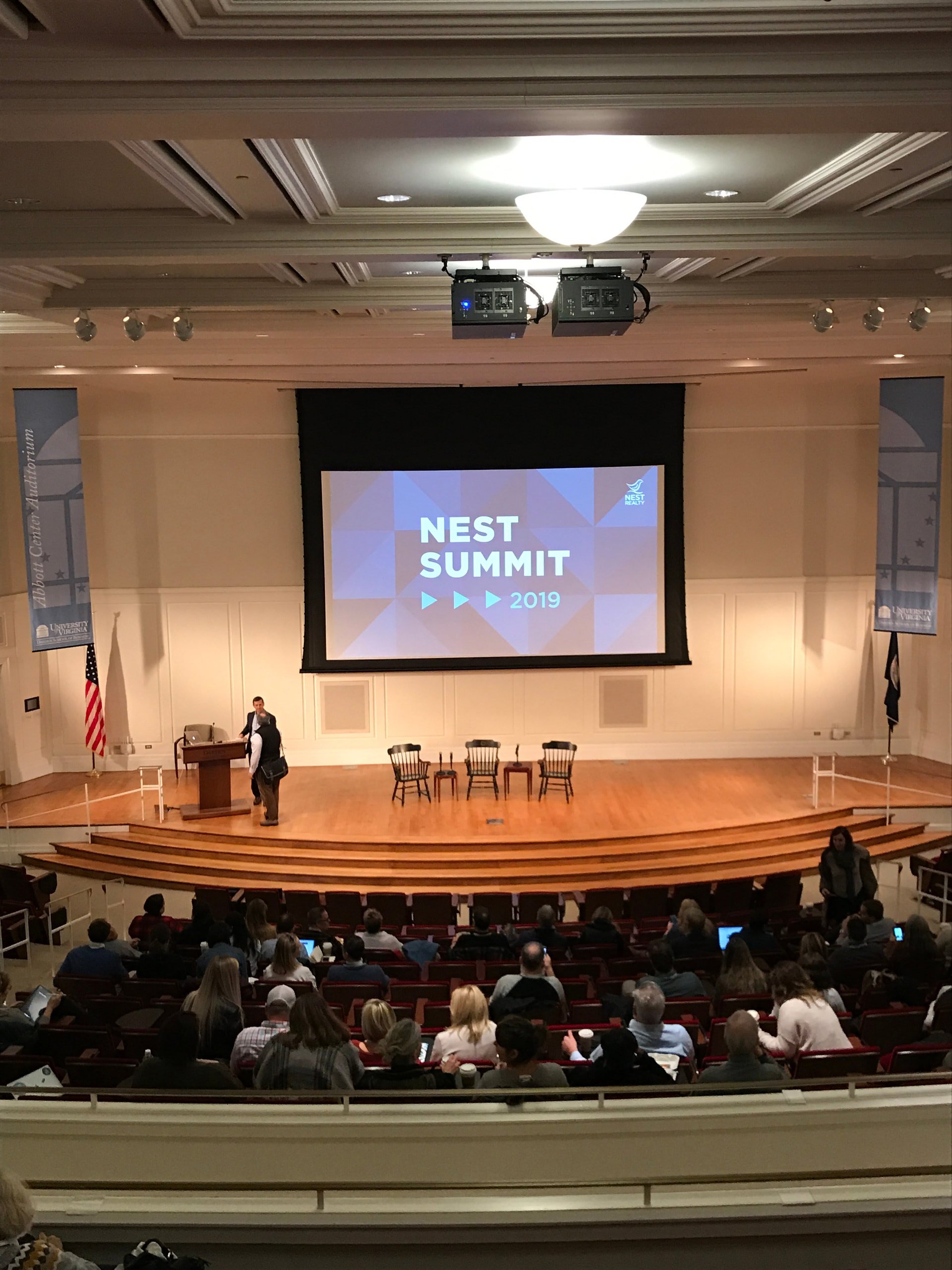
We just had our annual Nest summit, where we brought brokers and agents from our 14 offices to Charlottesville, VA . We were going to send this out to just our 300 or so agents, but thought you might like it too.
In this episode, Jonathan, Keith and Jim talked about five big topics:
- Zillow’s “moon mission,” iBuyers (Opendoor, Knock, OfferPad, Redfin, Zillow Offers),
- the end-to-end real estate transaction,
- Fair Housing in light of the Newsday investigation,
- the new Clear Cooperation MLS 8.0 policy,
- smart phones and technology...and a few tangential topics woven in.

You can listen to the podcast here , and subscribe to the podcast here.
If you enjoy our podcast, please share it with a friend or colleague, and rate us wherever you listen to podcasts!
Transcription Follows
Jonathan: With our Sweat the Details podcast, we sometimes talk about what’s happening within Nest, sometimes interview folks in other industries. We’ve interviewed, gosh, folks that run breweries, independent bookstores.
Jim: We just put one out with Greg Fischer from West Main , he’s a broker, and he’s in Denver, Colorado, the CTO there, did charity ...
Jonathan: A lot of different industries that we just talk about, really it’s the ... the concept is what details do you focus on in your business to help your business grow, and try to relate it in many cases back to real estate. Have we already started one with Popeye’s Fried Chicken?
Jim: Popeye’s was two weeks ago?
Jonathan: Yeah, that’s a good one. You should listen to that one .
Jim: Greg was yesterday, guest suggestions are welcomed. We always are looking for guests because apparently booking guests is one of the more challenging things that we’ve done in the podcast.
Jonathan: Yeah, it’s hard. All right. What we’re going to talk about today, we’ve got five things, great innovative topic here, but five things that we want to talk about that we believe is relevant to everybody in this room, and relevant in some cases of just like, you need to be aware of it. In other cases, you get you’re thinking about what’s happening in the world. But a lot of this is really, we’ve curated based on conversations we’ve had, industry trends, conferences we’ve been to. I was just talking to a couple of folks earlier, and what we’re trying to do with these couple of days is curate as much information from the multiple conversations and conferences that we go to across the country and really condense that information into a day, day and a half here at the summit, so you don’t have to be traveling to conferences and spending a ton of time reading online and listening to a lot of podcasts. We still recommend that, but we’re trying to condense as much of that here as possible.
Jonathan: So five topics. Well, we’ll get started, and really the format for this is we’ll do a real quick, introduce the topic, maybe give a little bit of a presentation, and then we’re just going to have a quick conversation about what our thoughts are on it and how it affects us as Nest, and us as realtors. First topic I want to talk about is this concept of the end to end transaction. And real quickly, what is the end to end transaction? The end to end transaction is the ... I should say attempt right now, attempt for certain brokerages, or real estate transaction companies, or real estate companies to really grasp the transaction from start to finish, and own every step of that transaction. Think about jumping on an airplane, the airplane takes you where they’re going, right? You get on the airplane, and the pilot flies, and they take you where you’re going, and you really don’t have too much opportunity to do much once you’re in that plane. What’s the problem with this, and we’re going to get into this in a little bit. What’s the problem that we’re dealing with in the industry? One is, the services that we’re offering that are basic are now becoming more and more expected.
Jonathan: Consumers view our service as very transactional and specific. So for realtors, for us to get into this entire life cycle of a transaction, I’m going to show you some bullets in a second about what exactly that is. We’ve, as an industry, have pigeonholed ourselves and that people see us as playing one specific role in the transaction, and that is helping them buy or sell a house. Other than that, we’re there for referrals, and we can recommend different people and recommend different companies, but people see us as a very specific segment of this transaction. The issue is that as we’re dealing with, and we haven’t talked about this much this year, but our agent commissions continue to shrink a little bit, not as much as maybe in years past, but continue to be squeezed a little bit. Brokerage margins continue to get squeezed, so what’s happening out there in the industry is that agents, brokerages, different companies that are getting into brokerages are saying, all right, well, I can only make so much money off of the transaction, what can I do? Can I make money off of mortgage and legion, and all these other things, which is this concept of the end to end transaction of a brokerage or a company owning every single aspect of that transaction. As of right now, we just own one part of it.
Jonathan: So, as I talked about, agents are making recommendations, but these recommendation are, fragmented. Once we refer somebody to a lender or to a mortgage company, they’re out of our control really, we don’t have control over the process. As we talked about yesterday, most agents don’t provide real value after the transaction. So, what’s this bigger opportunity that some companies are looking at? They’re trying to own every single piece of the ... I shouldn’t say transaction of the process, so brokerage, insurance, mortgage title, you can read all these, everything all the way down to telecom and cable and home security. There are real estate brokerages in this country that are right now looking at, how can we make money off of home security and contractors and additional home services? One of the reasons why this is appealing is because as I mentioned, commissions and margins are shrinking, but also, the average home buyer in the US spends $10,000 on additional services related to their home within 60 days of buying a home, and that’s for the average price. You can imagine somebody buying in the upper end price points, could spend three, four X that.
Jonathan: Companies are looking at this and saying, how can we basically stick our hands in and get a piece of that? This quote right here, and we’ll talk about Zillow a little bit today. This quote right here stands out to me, and then we’ll get into a conversation here. Rich Barton, who’s the new CEO of Zillow, made this comment recently; we are on our way with our own exciting little moon mission to transform, streamline and integrate the shelter transaction. As we talked about this at our Lead Broker Summit the other day, two phrases in here stand out to me. One, something I’ve never heard before is shelter transaction. So, they’re looking at this end to end transaction and saying, we want to be an absolutely integral part of every single part of this process, and I’ll show you a slide in a second, giving you some examples. The other thing about this, which scares us in a good way and we should all be aware of-
Jim: It challenges us.
Jonathan: Challenges us, that’s a better term, this phrase moon mission. Originally, you could look at that and say yeah, big, well. But think about this, if you have a moon mission, you don’t take three dudes and stick them in a room and say, “Hey, can you solve this problem?” Moon mission is a core company focus, and clearly, they want to transform, streamline and integrate the shelter transaction. They have plans to ... within reason ... I mean, I still think they believe in realtors and they’re still utilizing realtors, but this whole concept of a moon mission, and they’re really focused on really taking over this whole process, and making money along the way.
Keith: Yeah. Also, I want to point out that the shelter transaction number one, I think it’s funny that Rich Barton capitalizes his own statement. I think we may find that he’s actually trademarked this term for Zillow use for the future. But when you look at Zillow, their customer base is not just a home buyer, their customer base are realtors, their customer base are lenders, their customer base are everybody that currently exists in the Houz market frankly. It’s also buyers and it’s tenants and landlords. And so, this idea of shelter, they’re looking to solve the problem, not just for your clients, but for the new college graduate who is looking for a rental apartment. They’re looking to become a part of a transaction and a relationship long before they get into a home buying process. I think the best way to think of the core model of where we’re trying to help with the end to end is that is the wedding coordinator.
Keith: The wedding coordinator controls the venue, the caterer, the bridal gown company in some cases, they put everything together, and I think we’ve always wanted to be that wedding coordinator, but understand that now Zillow is jump-starting you, and on their first date they’re getting involved with Zillow. And it’s no longer waiting for the home buying process for them to start looking at this shelter transaction, it goes way, way back.
Jim: No, I think one the thing Zillow is trying to do as well, and they’ve done a really good job is, they are becoming the voice of real estate in many ways. I think that’s something we need to be mindful of is, their governmental exploits are significant and they’re outpacing NAR and a lot of ways, so being very aware of how they ... I mean, the research that they put out is beautiful, and it’s mostly accurate, and it’s something that I think we need to be very cognitive of, is they are the ones that consumers are looking to as the experts in this space. It’s not something to be afraid of, is something to be aware of and to leverage it as best you can.
Jonathan: That’s right. Their content, they’re putting out, we’ve used the term, we’ve used it before, Clara used it yesterday. This report they put out every year, it comes out with some amazing-
Jim: That’s fantastic.
Jonathan: What Zillow are doing right now, this is the process where they are right now. They’ve got Dotloop, which is transaction management. So, as soon as the transaction started, and somebody puts it in to Dotloop, they have all the information. They have the home, the home price, the buyer names, the seller names, they’ve got all that information. They’ve got it, and they can do a lot with that. They’re also doing Zillow Offers. We’re going to talk about Zillow Offers here in a few minutes, we talk about the iBuying, I wouldn’t call it a phenomenon anymore, but the iBuying process. Zillow Offers is what I alluded to a little earlier in my talk is that they are going in and offering to buy houses, sight unseen in some cases and making offers online to folks to buy their houses, and then they take them, and then they pseudo flip them, but there’s some additional services that they’re offering, and then we’ll talk about from an iBuyer standpoint.
Jonathan: Now, they have Zillow Closing Services, and Jim, how many States are they licensed in?
Jim: Three or four States right now.
Jonathan: Three or four States right now. Right now, Zillow Closing Services only applies if you’re selling your home through Zillow Offers, or buying a home. I guess you could also buy it from Zillow. So right now, Zillow Closing Services, they’re only working with Zillow Offers transactions, and they also have Zillow Home Loans. And so, they’re trying to get into arguably the most profitable part of the real estate process, is the home loan or home loans, and so they’re getting into that. The other part that I have here at the bottom, I couldn’t find a logo for it, but they have a form about it, Zillow AI, which is predicting when your clients are going to buy and sell houses. So, they’re trying to predict when they’re buying sell houses, then when they do buy and sell, they have all the information, the transaction management and they’re going to try to take them through this entire process.
Jonathan: One last slide here real quickly, Zillow is not the only one that’s trying to do, slide into every part of the transaction. This is an email I got last week from Amazon, and a lot of you may have gotten it too, Amazon Home Services. They were offering holiday light hanging, they offer carpet cleaning, they offer all these different services. So, we talk about what the value of a realtor is. Clara mentioned yesterday, and I’m going to bring her up a couple of times because I just thought she just did such a great job, but she had clients call her because ... there was some ...
Jim: Peacock.
Jonathan: Peacock, right. An animal, a peacock, and so they called her. This is a type of situation where you want your clients calling you for, who do I call for a carpet cleaner?. I know the big challenge we have in Charlottesville is we need folks that do carpet stretching, and so that those emails fly around a lot. So, all these services that Amazon’s getting, they’re trying to weasel their way into your after the transaction trust value proposition. And so, it’s unbelievably important for us to realize that in this case, we’re potentially competing with Amazon and they very well could be getting into this-
Jim: I mean, I get calls from Amazon multiple times a week. They go to spam, but asking me to join their Amazon network to be one of their partners. I’m still convinced that eventually Amazon’s going to buy Zillow.
Jonathan: Who knows? Scary. Thoughts on that?
Keith: Well, I mean, I think again, anyone who thinks that Amazon’s not going to be in our industry where we are is missing where Jeff Bezos goes. He sees a much bigger picture of how to include, and to enclose the entire consumer experience, and if he can do that through partnering with local boots on the ground, then he’ll do that. If it requires a partnership with Realogy where he’s making referrals out to Realogy, he’s doing that. I mean, this is just the start of where that goes, but it does speak to the concierge services as well, and things that your sellers are looking for, and ways to increase the value before the transaction as well.
Jonathan: Before the transaction and after, I mean, we’ll continue to drill his home, and hopefully that’s one of the key points that everybody takes out of here. I know just looking around the room, a lot of you do a phenomenal job of it, but just figuring out what you can continue to do to just be that trusted advisor during and after the active transaction process. And so, you want to talk about these concierge services, Jim?
Jim: Yeah. Most of us will go into our sellers houses a couple, two, three, four weeks and months and years even, and help them determine what those projects are that they need to accomplish before we take the pictures to list the house. Curbio and Redfin Concierge, and Compass, they are now in the process of systematizing this, where they will go in, they will provide the bridge loan for that $50,000 of renovations, and then get paid back when you successfully close. If you look at some of Curbio studies, the case studies on their site, I mean, they’re going in and they’re spending 150 grand, and then the sellers are making back 250 when they sell. I mean, it’s something that we need to be very mindful of as well, is that eventually these guys are going to come into each of our markets, if they’re not already, and I think there might be opportunity for us to be more aware of what they’re doing. Because I think Curbio, Redfin Concierge, they’re going to impact our markets, and as a service that they offer that we’re competing with.
Jim: If you go into a listing presentation and say, “You need to do these things,” and the seller says, “Well, how am I going to fund this?” It’s a different conversation.
Jonathan: It could also be that Curbio could be an asset too.
Jim: Absolutely.
Jonathan: I think if we fast forward to the days of us walking into a listing that’s like, ah, this is a rental property, it’s in pretty good shape, let’s just put a price on it and go. Those days could be gone, that we need to really look at it and say, “All right, I got to go through here and bring my contractors through, and we’re going to definitely repaint.” I know a lot of us are doing this right now, but the more and more that we deal with this HGTV effect and Zillow Offers and Offer Pat, and all these other companies that are going in and buying houses and fixing them up and refreshing them. People are going to go into a house that’s been a rental property for the past three years and see a bunch of dated equipment, and carpet that needs to be stretched, and walls need to be painted, and they are going to either low ball the you-know-what out of it, or they’re just going to turn around and walk away.
Jonathan: So, talk about expectation, you walk into an Apple store, what do you expect? And then you walk into a store with nothing on the shelves, and we just turn around and walk out of the door with that type of store.
Keith: Yeah, and I think the other pieces that as we work with buyers, we know that there are buyers who are looking for opportunities to do flips and to do remodels. I think they’re starting to seek out sellers directly, people with rental properties will regularly get calls about, do you want to sell a property that hasn’t been maintained fully? They’re seeking it out before it’s on the market, whereas the general buyer is now looking for properties that they can move into, and not feel like they need additional cash. They’re going in cash trap, they’re putting everything they can into the down payment, and into closing costs, and they’re not that interested in dropping another 75,000 to do a kitchen and two bathrooms, and paint the entire house. And so, this is really just setting yourself up where someone can come in and be able to get a mortgage on a property that’s turnkey, instead of dated and needing the work for the first six months they’re living in that house.
Jim: Which is going to lead to higher sales prices and faster sales prices, reduces that friction as we’ve been talking about.
Jonathan: Anything else on this we didn’t talk about or move on?
Jim: Think we move on.
Jonathan: Move on. Number two, big topic right here, which is affecting, I think really affecting three of our markets right now. This iBuying, and we’ve talked about it.
Jim: How many of you all have had firsthand experience with iBuyers?
Jonathan: So Charlotte, Triangle and Atlanta are really the spots where this is affected right now. It’s still a new concept, and I alluded to it a little earlier with these new models that are coming in and essentially what’s the iBuyer process? The iBuyer process is these companies, and we’ll show you in a second and give you some specifics on what’s happening, really interesting stats. But they’ll come in, and they’ll say, “Hey, look, your house is worth X amount, I’ll pay you a little less than X amount, but you get to pick the closing date, and ... Actually, I have a slide right here.
Jonathan: The direct buyer, which is the iBuyer, they’ll come in and offer you essentially a cash offer, how many days to close, the seller gets to choose, typically anywhere from five to 90 day close. So you talk about certainty, this is certainty, what they’re offering is certainty. How many days to prep and stage? None, because they’re buying it as is, how many showings? None, you don’t have to deal with showings, and the fee right now is typically 6 to 13% that they’re charging. Traditional sale, there’s a lot of question marks there because in some cases we don’t know, and in some cases we do now, but days to close or how many days to close, that’s not days, that’s months, but two to three months. Days to prep and stage, about one to two weeks right now typically, and I’m making some just general assumptions. How many showings? I mean, if we only knew how many showings it would take for just every house, and our fee, typically for Nest here is in the five to 6% range.
Jonathan: This whole concept of certainty, which they’re offering is appealing to some people.
Keith: Yeah, and I’ll interrupt also. I spoke to a friend of mine who’s from college who had a coworker who did sell their house at Zillow. He was dumbfounded, he took 20,000 less than I would have thought the house was worth, and he paid a 10% fee at closing to get rid of it. But the reality is, we go in and we fight for our commission rate at six, or really at three, the reality is Zillow is going in and saying, I’ll do it at 13%, and people are willing to do it because it means, I know that I’m going to sell my house for this amount, there’s not a question of what do I need to go through to get this done. I’ve got a job offer in California, I’m ready to move, let’s just get on with the next stage. And so, there’s definitely a cost involved for the seller in this, but it definitely has takers.
Keith: Is this right for everybody? Absolutely not. But there are certainly going to be more and more sellers who are there and that’s going to put Zillow into a position, and these other owners into a position to collect seller leads to be able to sell, even if they don’t-
Jim: I mean, this is going to this is going to affect every aspect of what we do. I mean, I read a story this morning on Deloitte, about how they project that by 2021, in the markets where Zillow Offers are, or iBuyers are, they’re going to be 10% of those respective markets. So, it’s not for everybody, but I think it’s going to be a significant piece of what we’re faced with.
Jonathan: And right now, just a term that’s used in the industry with iBuyers is this concept of a buy box. A buy box is essentially the type of house that these iBuyers are looking for, and it’s price, location, age, size, they’re trying to figure out this magic algorithm on their part. They’re trying to figure out this magic algorithm of what properties they can buy, in what neighborhoods. And really, it’s like cookie cutter houses right now, so this is really big. Phoenix is the hotbed of the US right now, and I don’t have the stat on the top of my head right now, but I think what I saw last year is the sub 250 market in Phoenix, that’s 7% of all sales in the sub 250 market was iBuyers. So, pretty big number for just a brand new concept.
Jim: And it’s only about 18 months that they’ve been there.
Jonathan: Yeah, it’s not a long time.
Keith: I was going to say, the other piece of this is you think about where Zillow is or the other iBuyer groups, all of us have struggled to find leads for sellers. We know how to find the buyers, the buyers are found through open houses, they’re found through advertising, and all of our IDX’s that we put on our websites. That’s how we capture the buyers, so people shopping for homes. But the sellers always been elusive, but with Zillow is now done, is they’ve set up a thing where you can call in, someone can give you a price on the house. Well guess what? As soon as they give you a price on the house, even though only 5% of those individuals are ever going to participate in an iBuyer program, they now have those 20 leads for the one house they bought, they’ve got 19 additional clients who now need sellers agents to participate in a transaction, and they now are in a position to sell that lead out to you.
Keith: Additionally, what they’ve done is they’ve said, we’re going to continue to keep our best agents, and we’re going to pick the listing agents when they do sell, when Zillow buys house, and then subsequently sells it, they are listing with a full real estate firm, and they are asking for services of realtors, which means not only do they have the 19 seller leads to sell, they also have a house to sell, and they are the perfect company to be able to identify who the best realtors are in the market, for days on market, for price to sell, and they’re able to select those and go after them as premier agents, and to be able to collect even more fees from them. So, it is this amazing circle of-
Jim: When you say it like that, it sounds scary.
Keith: It’s terrifying.
Jonathan: Well, the other part, and I’ll just ... this flows right into this next slide. The other term that they use is called a synchronous seller. A synchronous seller is essentially an iBuyer seller who also wants to buy a house. So what they’re doing is they’re providing bridge loans and making money off of that, or referrals, they’re sending the referral from a buyer to someone. They found that 64% of sellers are also buying in that same marketplace-
Jim: I mean, that part makes the iBuyer program fairly appealing, because I think if you have a buyer who is able to come to you and make an offer on a property that is not contingent because they’ve sold it to Zillow or Opendoor or Knock or whomever, I mean, that’s a good buyer to have. I think there are multiple sides to all of these conversations, Perch, and there’s probably three more that just popped up this morning.
Jonathan: Ribbon, there’s a few others that are out there.
Jim: I mean, I think it’s, again, it doesn’t matter whether it’s scary or anything, it’s a thing we’re going to have to deal with in all of our markets eventually. So, I think being aware and mindful and informed as to what we’re dealing with, I think it’s a good thing.
Jonathan: Well, that’s a good point right there, because we can look at this and be scared, and be shivering our boots, we also can look at this as an asset for us. If you’ve got a property that you’ve got buyers or that you’ve got sellers and they want to buy a house, but you just can’t get the house sold, if an opportunity like this is there, where somebody’s going to come in and just buy it within a reasonable price, it allows that seller to go and buy a new house. Instead of having zero sides, you get the buy side and your clients are happy and you move forward. So, we can get into this now, but I’ll use Rich Barton again, he’s the CEO of Zillow, and he may be posturing a little bit when he says this, but he truly believes, and I can understand this, he believes that by reducing the friction of a home sale through iBuying, he believes that the number of transactions on an annual basis is going to increase.
Jonathan: So right now, there’s about 5.3 million transactions in the United States, and he was saying that there’s an opportunity for that to increase to over 6 million transactions because somebody who’s thinking about selling a house may say, all right, well, if I go the traditional route, I’m not sure if I’m going to sell it, I’m not sure what the price is going to be. There’s all this uncertainty, but if I can just click a couple buttons and get a price, I may not get the price that I want, but it’s going to allow me to just move on. And so, people may be more likely, instead of right now, it’s every eight to 10 years, maybe it’s every six to seven years that they may want to buy.
Jim: I mean, there’s a value as we said, there’s a value in certitude, and there’s a value in being able to say, I know my house is sold, I can go buy that house. I think that we’re going to-
Keith: Let me go to the slightly less expensive asset, but one we still trade, and at least probably once a decade or twice a decade, how many people have ever sold a car or had it priced at CarMax? All right, so about half the people in here, and I will say the last three cars I’ve sold, I have always gone to CarMax before I begin any shopping experience just to get a baseline. Okay, here’s the number, this is where we’re going to start, anyone that offers me less, I’ll just go back to CarMax. That’s the Zillow position, that’s the homeowner who knows I can get 285, and I’m guaranteed 285, and that’s my baseline. I think that’s where you’re going to start seeing a lot of shopping going on.
Jim: And I think Zillow’s going to set the market. I mean, we said this a decade ago that eventually Zillow is going to get the point with those estimates, that they are the definition of market value. I think we’ll get there eventually.
Jonathan: Well, I just want to go through a couple of quick case studies as we wrap this section up, just to let you know how two main companies are doing in the iBuying standpoint. I will tell you that I didn’t put it on this slide, I need to give some recognition to the T 360 Group who did this study and put a report out recently with us. I’ll give them their due with that.
Jonathan: Opendoor in Denver, which is a big spot that Opendoor is operating, the average days on the market were 32 days to sell a house, the average purchase price of homes that they bought was 365, so they bought houses at 365, and they sold them at 368. Not super profitable. The average increase in purchase for a house they bought and sold was $2,500, so not a lot of increased value there. There’s a caveat here, this number actually isn’t that bad, but there’s a caveat. Opendoor lost 1.67 million on 216 homes during the time period mentioned here. That being said, that is just directly on the transaction, that does not include any marketing, admin, technology, anything behind the scenes. So over a course of ... what is that? 10 months or so, they lost $1.67 million on homes. Check this one out. Zillow Offers, from January to June 2019, 1,200 homes, all your revenue, costs or revenues, sales and marketing expenses, tech and development, general admin, all those interest expenses, everything