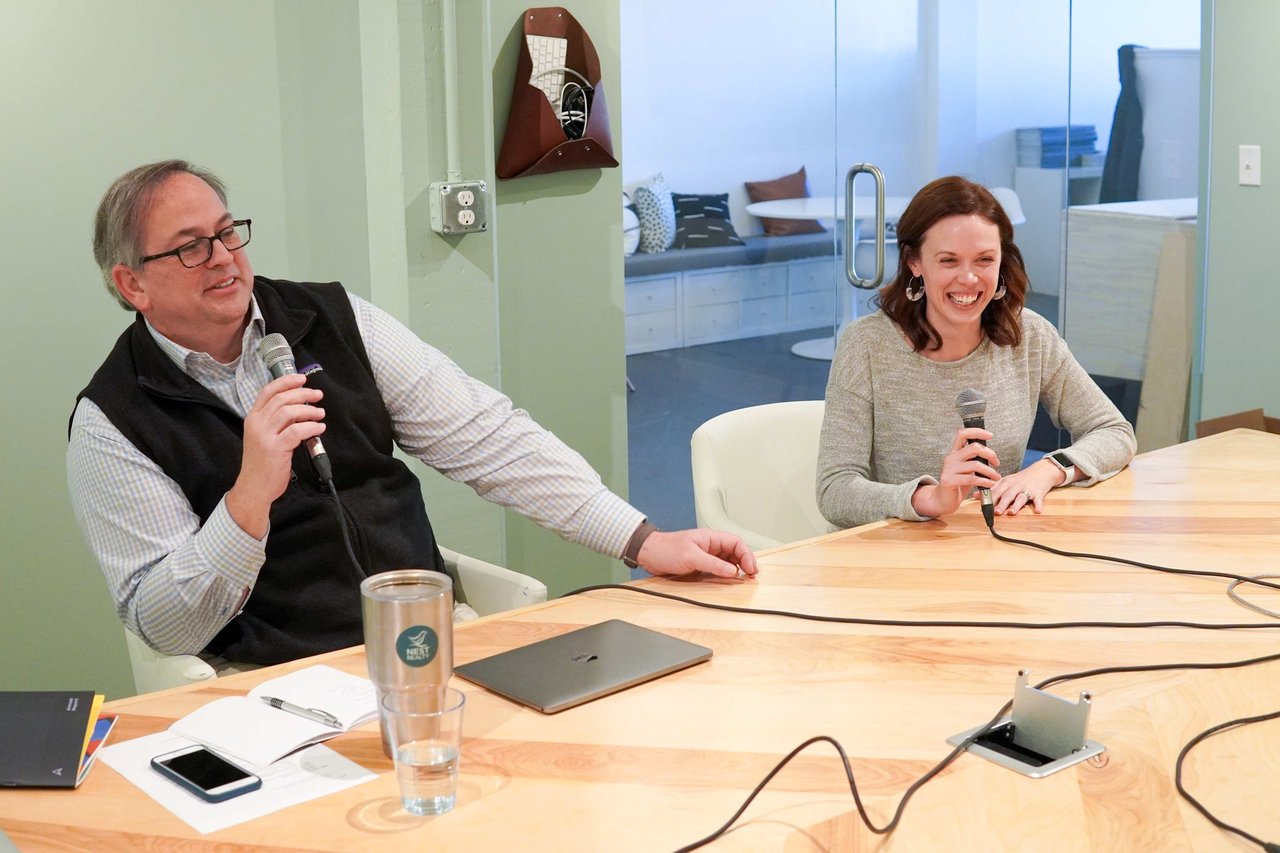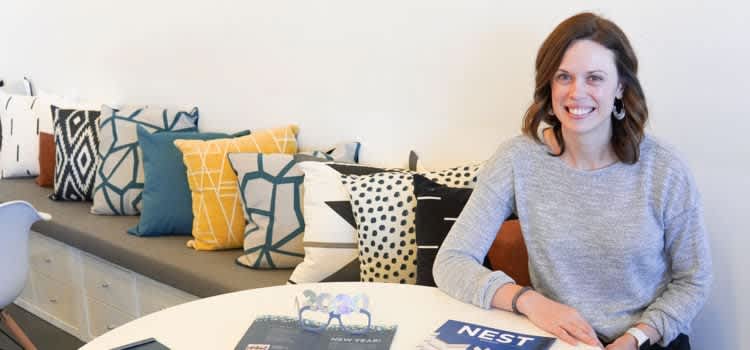
This week, we spoke to Paigelee Chancellor, Nest Realty’s Design Director. We talked about some of the projects she and her team are working on, challenges and opportunities as Nest moves into more new markets, and what it’s like to work with her team at Nest HQ.
You can listen to the podcast here, and subscribe to the podcast here.
If you enjoy our podcast, please share it with a friend or colleague, and rate us wherever you listen to podcasts!
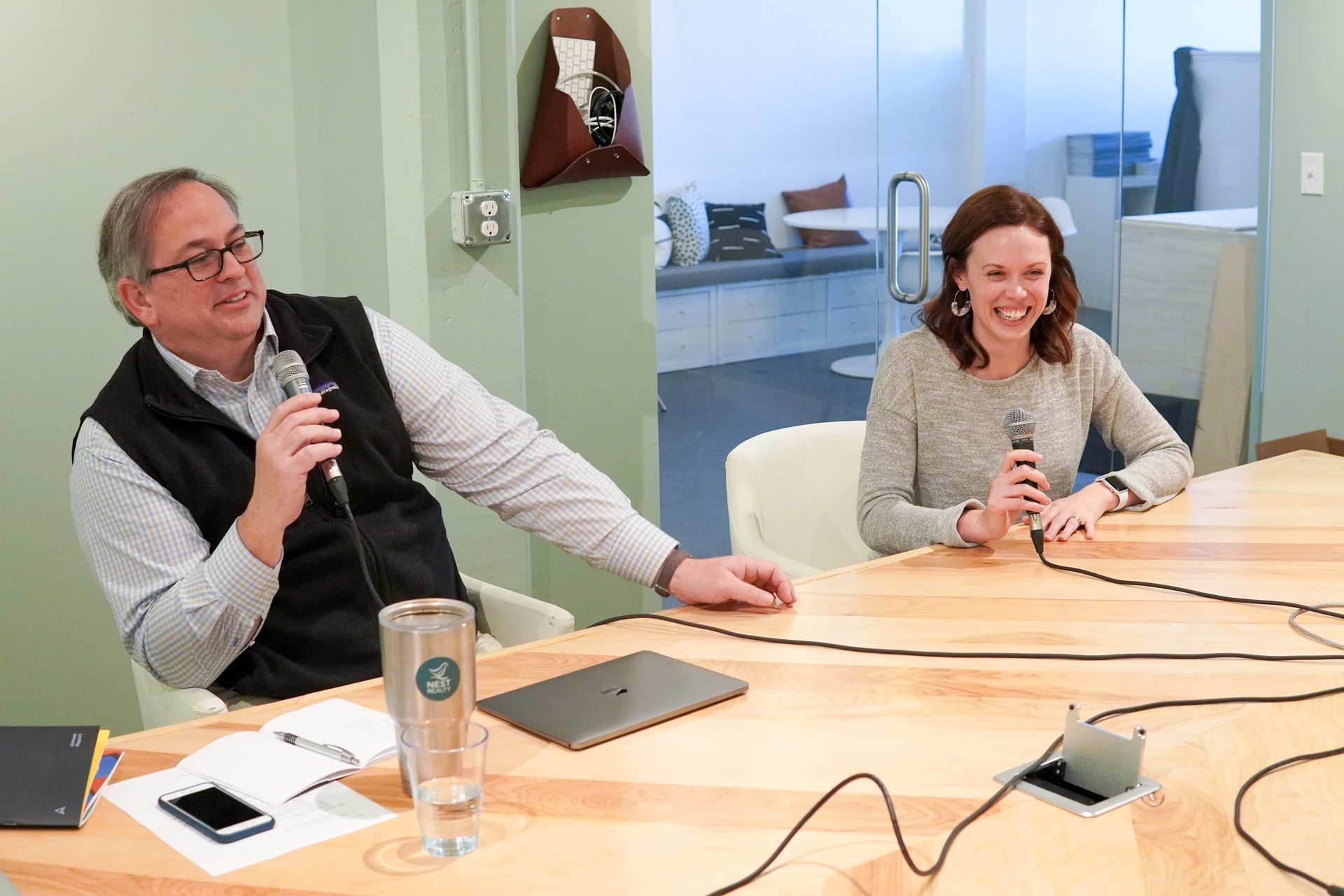
Highlights of our Conversation
- Establishing and maintaining brand consistency
- Helping our Nest offices use and leverage the brand, and building the foundation
- Culture of the in-house Nest Marketing team
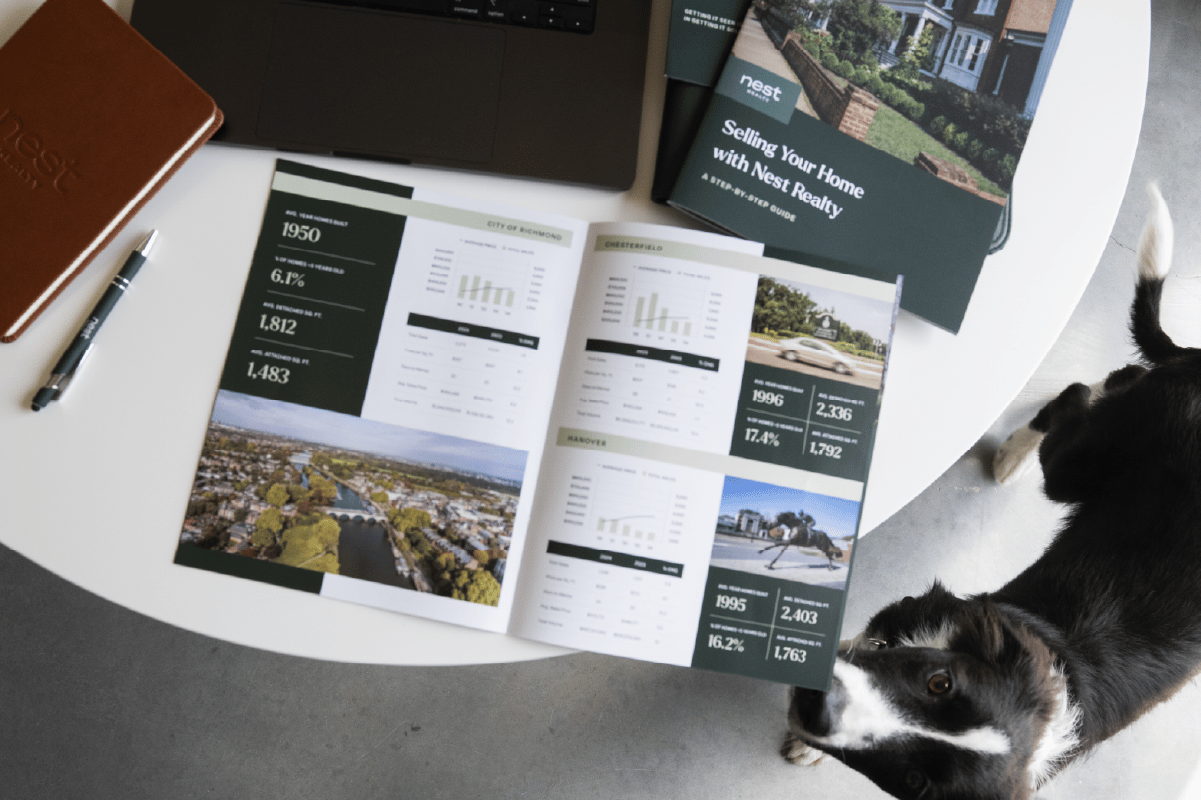
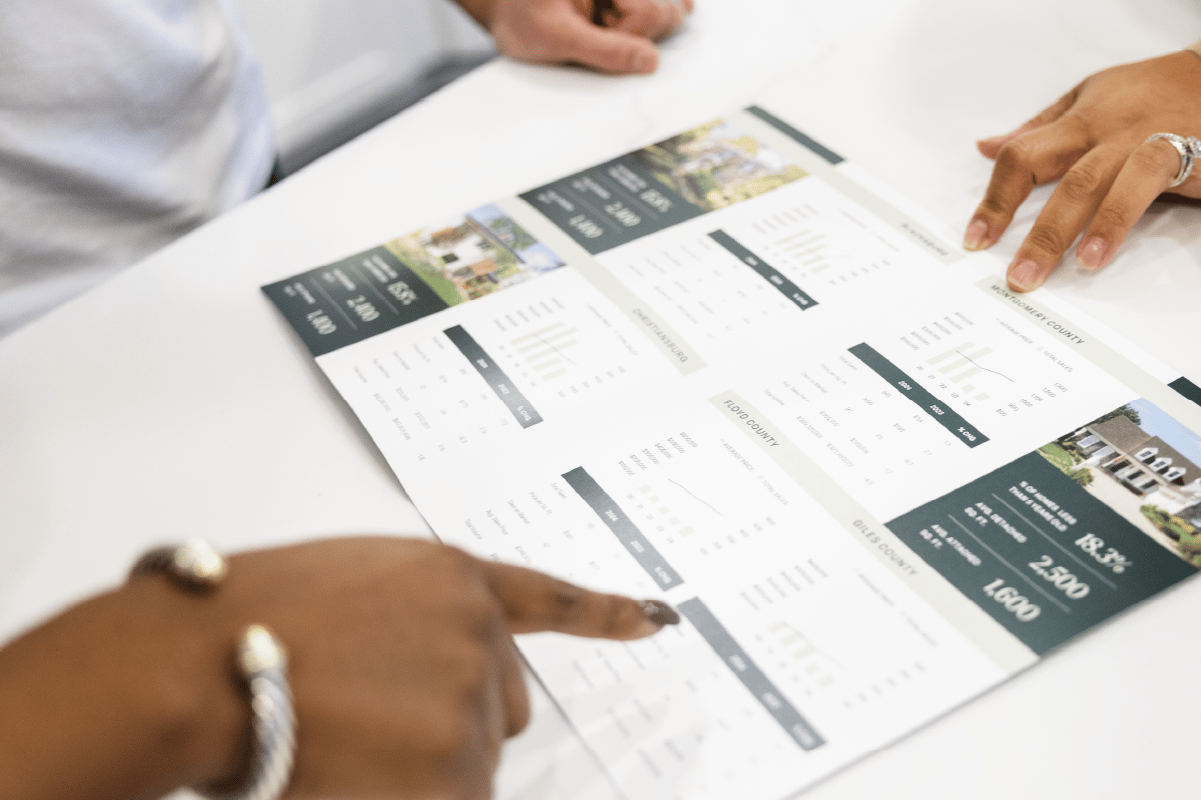
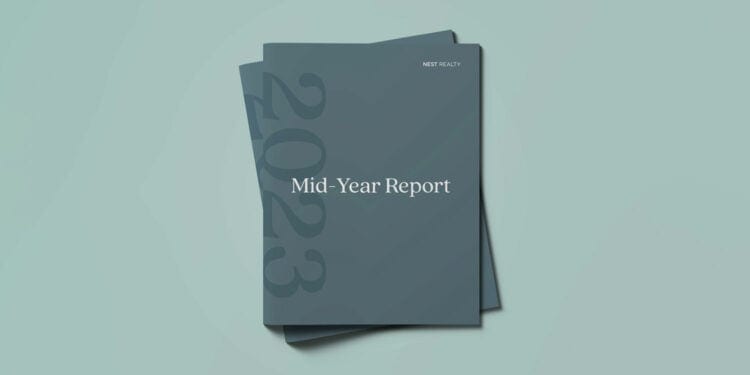
- Nest’s annual reports
- Two challenges (and opportunities) that her team sees consistently (and what new Nest offices may start to prep as we grow)
- Localization process on a market by market basis.
- What are you working on right now?
- What would you tell someone about working at Nest?
- Tote bags and cardboard birds
Nest Magazine evolution; 3.0 in fall 2020 —
Subscribe here !Value of agent customization
- How many magazines do we publish, and how many different versions are there?
- Trifolds.
- The one detail that Paigelee sweats
We hope you’ll join us for the next episode of Sweat the Details. View the full transcript below.
Transcript
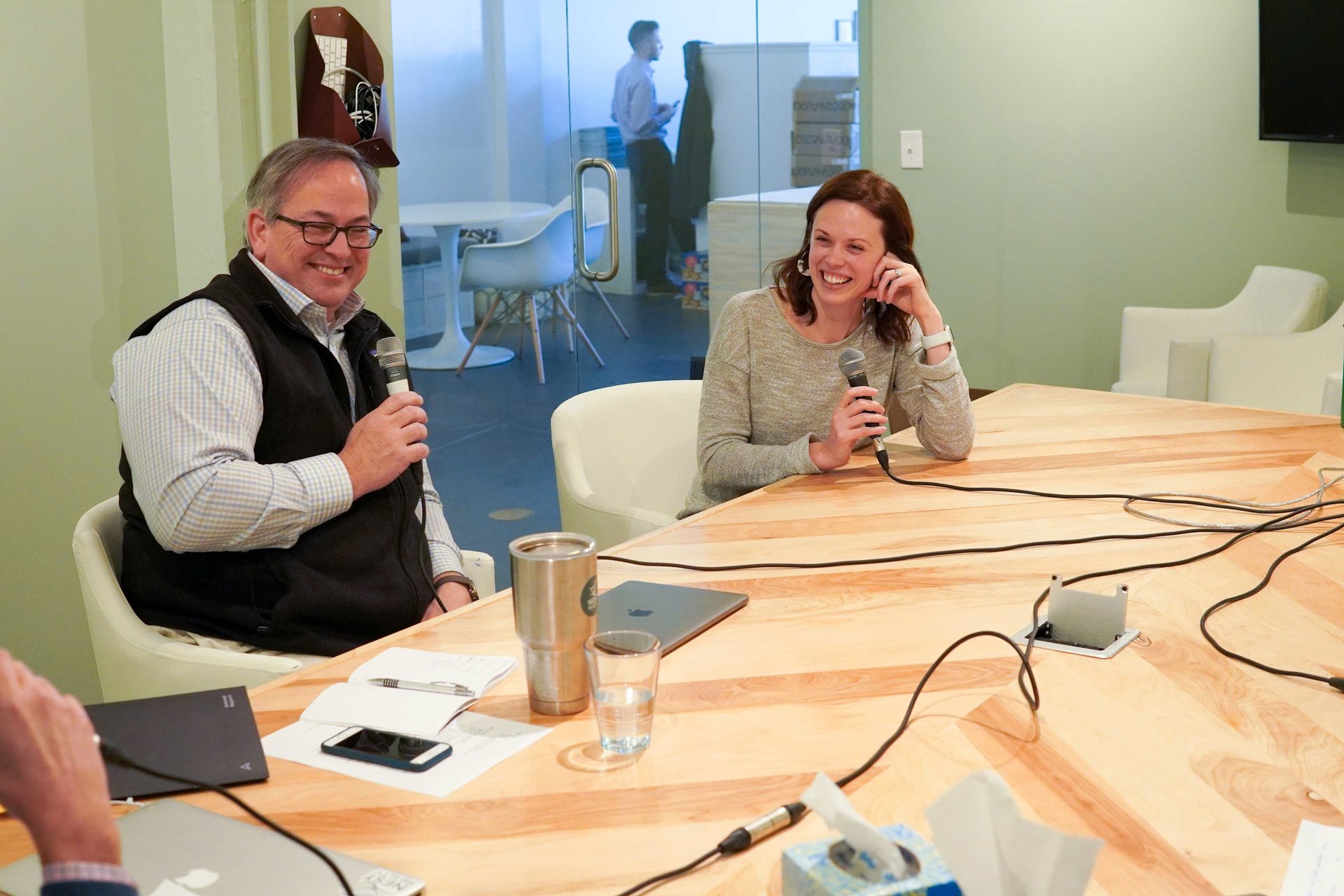
Jonathan: Hey, it’s Jonathan with Nest Realty, and Sweat The Details. I’m here with Jim Duncan and Keith Davis. Today we have an internal conversation with Paigelee Chancellor, our design director. And had a chance to talk to her about our design philosophy at Nest, what we’re working on. So a little bit about our new branding, and some of the design challenges that we’re having as we grow into new markets.
In addition, we would love your feedback on Sweat The Details. If you have a response or a question, please take a voice memo on your phone and email it to [email protected]. Thanks. We look forward to hearing from you. And if you’re so inclined, we’d love to have you post a review on our podcast. Thanks so much.
Paigelee: Our Design Studio. Can I hint to our Design Studio and just name it that? Okay. So to keep things consistent, we have created our Design Studio, that gives all of our locations and agents lots of templates in our branding, in our style, and in our look, to cover a myriad of marketing pieces.
Paigelee: And so our hope is, that even though they’re independent contractors, and can get somebody else to design their stuff for them, we want to provide them really great designed pieces that marry well to our brand so they can use those, and then that way everything looks consistent. Everything is Nest-specific. And if somebody sees a Nest marketing flyer in Jackson Tennessee, and they also see it in Raleigh Durham, it will be the same, across the board.
Jim: So making it easier and better and more compelling for them to use them, then for them to go out and-
Paigelee: Right. I mean we feel like the simpler we make things, the easier it will be for agents to use, and they’ll just default to use our stuff, rather than sourcing a designer and telling them what they want. We just try to listen to what our agent’s need, and then make templates based on that, so that it can be used across the board.
Jonathan: And I think, one of the exciting things about that is the fact that it started off as print pieces. We used to call our platform for agents Printmaker, and now it’s shifted to Design Studio, because there’s print pieces. We can create custom listing brochures, signs. But now, they can do social media templates, and then coming soon is going to be video-
Paigelee: Video is, we’re very excited about.
Jonathan: And send different Instagram stories, and things like that. So that’s pretty awesome that we can, (a) because we’ll talk about this a lot, but we’re very focused on keeping our brand as consistent as possible. And (b) we want to make things as easy as possible for agents. So the fact that we’re crafting this, and built this, and you and your design team have built this is awesome and it’s been really helpful for our agents.
Paigelee: Yeah. I think one of the best things about it is being able to keep everything in-house. So then we have a better rein on our design, and a better rein on all this stuff being put out. And I think that just keeps everything consistent across the board. And just being able to know that people are on social media more. So giving them those templates to use, or those Giphys to use on their Giphy channel that are a little bit more fun and exciting. We just try to provide everything that we can to help them stay on brand.
Jonathan: How do you and your team strike the balance between ... we talk about real estate branding, and nobody can see me right now, but most real estate branding is like my arms are way wide, and you can do a lot of things, and there’s not a lot of brand consistency with a lot of firms. But the example I give all the time is Apple, which is very narrow, but in the real estate world, working with independent contractors, we believe we need to give a little bit of flexibility to agents so they can infuse their personality. But we also want to keep things consistent.
Jonathan: Talk to me about how you’re striking that balance with agents wanting to have a little bit of their name, branding, and in some cases, logo branding and team branding, but want to keep things consistent also from an overall Nest perspective.
Paigelee: So I think part of the answer to that, is the brand refresh we did last summer. And we added some more colors, some more brand elements and some new fonts, to try to give ourselves more wiggle room on all of that, and to give agents and ourselves just more space to create, and more things to do with everything. These are really great answers, guys.
Paigelee: But some of it, I think, striking the balance. One great thing about Nest is we have all of our different facets. So friends of Nest, or franchising, or agent-facing. Each of those, I see it as different brand guides. So we’ll have our overarching brand, and then each of them get fun elements throughout. And so that keeps us on our toes, I think, in figuring out different ways to incorporate our brand elements in each thing, but also make it look cohesive.
Paigelee: So one thing I tell our designers is always shoot for the moon, and I may take you back a little bit to rein it in, but I’d rather you push the limits, so that we can see how we can expand our brand, and then reel it back, but always save different designs for later. Because maybe next year, we want to evolve a little bit more, and we’re like, “Oh yeah, you did that really cool design. Let’s pull that back out, so we can give agents a little something more to work with.” And so I think it’s just slowly stepping in, and evolving, and adding more and more to it, but also keeping it within our colors, our fonts, and our brand.
Jim: How do you articulate those threads or those channels to franchises?
Paigelee: I always start very basic, and then I slowly introduce more and more to them.
Jim: What do you start with?
Paigelee: The foundation, so just our brand guidelines. These are our basic colors, these are our basic fonts, these are our basic tools. And then from there, we start to slowly incorporate more fun things. But I think with anything that you do, you have to learn the foundation before you can build onto it.
Paigelee: And so once I feel comfortable that, even with our designers, once I feel comfortable that they’ve really grasped who we are, then I can start to add in a few more things to add to their toolkits. And so I think that’s the biggest thing, is making sure that they understand where we’re coming from, that we’re not just being tyrants, that like, “You must only use these colors.” It’s for a very specific reason. And so that usually comes pretty fast, which is nice. And then slowly, we’ll start to add in the rest of it.
Jonathan: So basically with, we have lead brokers who have all of our tools through the Design Studio that our agents could use, but also many of our lead brokers also have designers within their own market who handle the one-off stuff. How much work are you doing directly with those designers? I know you’re having significant influence, but how much actual day-to-day impact are you having with them, or how’s that relationship work?
Paigelee: A lot of the times, I’ll be the final say. So once one of our account managers has talked with the designer and they’ve come up with something, they’ll send it over to me, and then I’ll give a final look. And a lot of the times, it’s close to what I want it to be, and I can just give a few tweaks, and then it’s off to the races after that. But most of the times, thankfully we have a great marketing team that knows my vision, and can intuitively know what I would say to any given design submitted. And so they can do a lot of good back-and-forth before the design comes to me. And most of the times, it’s just small tweaks and then sending it off.
Jim: Does having the team in-house help with that culture and that communication of brand, and just your thought process, to help that cultural aspect be better conveyed?
Paigelee: Absolutely. I like to say that my best designs come from organic conversations. And that’s just me talking to a team member about something, or just even getting something in the mail here. And then we’re looking at them like, “This would be a great thing to do for agent recruitment.” And so I think if we didn’t have that in-house team, that we’re all on the same page with, it’d be a little bit harder to organically have those ideas come up.
Paigelee: And so I think reining it all in-house, and just being able to pop over to somebody’s desk and be like, “I just saw this design that you’re doing, and I had a great idea. Keep doing what you’re doing, but maybe do one with this design in it, and let’s just see where it goes.” And so just being able to do that, and them knowing my thought process, and me knowing their thought process, is very nice and easy.
Jim: Tell me about that agent recruitment piece. What is that?
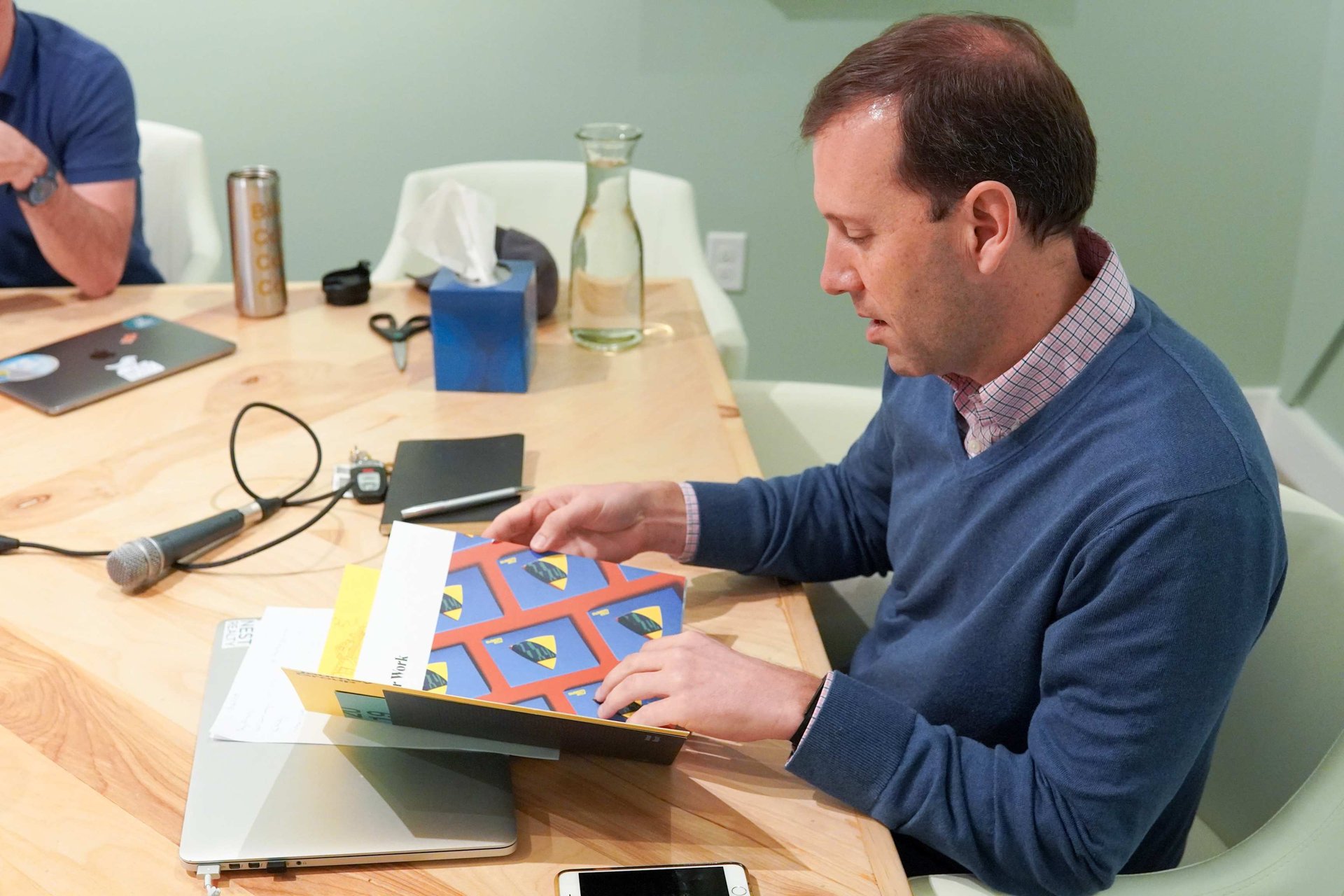
Paigelee: So we had our printer come up with lots of different form factors for, I think it was our franchise booklet. And while me and Sarah, the marketing director, were looking through all these different pieces, trying to figure out what that form factor would be, we came across this really cool folder with little book inserts in it. And just while we were looking at it, we’re like, “Well, I mean, this could be a really cool use case for this.”
Paigelee: And so as we did the franchise booklet, we came back to it and we’re like, “Well let’s break it out into these little booklets. It’d be an easy way to have lead brokers presented to an agent.” And JK was on board with it, which is always great. And so then it evolved into, “This is our agent recruitment piece.” And the last booklet we’ve made very local, so they can customize it to their different locations. There’s a pocket in the back that they can put annual reports or magazines in. And so we tried to make it as useful as possible, to be able to have anybody walk into an agent recruitment meeting and just be like, “This is Nest.”
Jim: Right. It’s one of the best pieces I’ve ever seen.
Paigelee: Well thank you.
Jim: We’ll take pictures, and put it on, as part of the blog, and part of the podcast. And I think it’s just phenomenal to have that work product to deliver and say, “This is what we do.” It’s kind of amazing.
Paigelee: Yeah. And I mean, just going back to my design process for any piece, is on the outside, we just look like any other brokerage. We’re just, it could just be a folder. Sure. But then when you open it up, it’s something very unique. There’s moments within it, whether it’s each little booklet that speaks to something else, or with the franchise booklet, there’s a, quote, waterfall that’s just a fun little aspect within it.
Paigelee: And so I think those speak to Nest, is as you get to know us, we’re very quirky, we’re fun, there’s different surprises that we’ll throw at you. And I feel like that’s what each of our print pieces speak to. And I think that that’s always in the back of my mind, is what can look basic on the outside. But once you get it, is a really cool thing.
Jonathan: Well I will say, the other thing that’s really neat about the recruiting package, just because it’s seven or eight individual booklets, and because one of them is 100% customized to the individual market, they all have the total feel of consistency that they belong together. And yet the individual one doesn’t stand out as being, if you had taken a 30 page document and thrown up a four page tri-fold at the end of it, which a lot of people will do, here’s what’s different about our firm. It’s just obvious that, here’s the canned piece, and here’s the individualized. And I think it has this very natural flow that all feels organic to that individual office, which is a great piece.
Jonathan: Why didn’t you do a trifold, eight and a half by 11 trifold, for that? I was a little upset with that [crosstalk 00:11:17]. Can we make 2020 the year of the tri-fold?
Paigelee: Well I love the eight and a half by 11 tri-fold. I don’t think it speaks to what Nest is.
Jonathan: We can do nine by 12.
Jonathan: Nine by 12.
Jonathan: But we’re going to be different, innovative. 10% bigger.
Jonathan: 20% bigger in 2020?
Paigelee: As long as the front is just the logo, and then we can move on.
Jonathan: Well I will say that the franchise recruitment piece, and the agent recruitment piece, which is more internal names for it, are not only beautiful and informative, and speak to the brand, but they’re working too. So really when you talk about design and marketing, you can design things that are beautiful all day long, but if they don’t work, then they’re not successful.
Jonathan: So I think, the great thing that you have going, is that you and your, not your design team, are including feedback from other copywriters, and franchise services director, agent services director and franchisees getting feedback, and agents. So taking all that feedback and compiling it, and putting it into the piece, that’s what has made it work, on top of the fact that it’s beautifully designed. It’s got these nice surprises to it also.
Paigelee: Yeah, I think that’s probably one of the biggest challenges in designing our pieces, is taking all of the agent services and franchise services and location, and combining it into something that’s useful for everybody.
Paigelee: And so that also goes back to having the team in-house, is I’m able to design something, and take it over to our agent service director, and be like, “Hey, will this work for agents?” And have her give me direct feedback, or take over our recruiting piece to the franchise service director and be like, “Did this work last year? Can you get feedback?”
Paigelee: And so just having that direct communication, and then taking it, and localizing it, is also so helpful. And having it all in-house, but then also make sure it doesn’t look like it was just pulled out of a catalog, and people aren’t just popping stuff in.
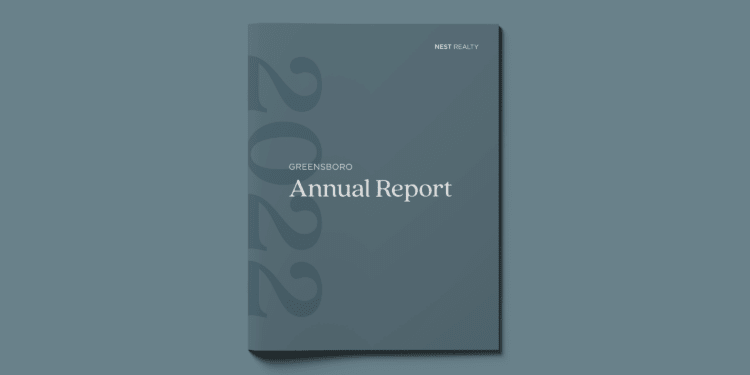
Paigelee: And so at least with the annual report, I’ve dug myself in a hole because I wanted it to be hyperlocalized. Then it turned into this giant beast. But I think it’s really cool, because it’s going to be more magazine-like, but it’s definitely,
Jonathan: They’re fantastic issues. They are. And just looking at the ability for lead brokers to make it their own, as every one of the markets has a different feel to it. So it’s pretty awesome.
Jonathan: Tell me, what one of the challenges you faced with having, as we grow, adding new locations, new states. What’s one or two challenges that you face consistently?
Paigelee: Photography. I feel like that’s one of our biggest pain points, is-
Jonathan: And I will say for the lead broker standpoint, just finding photographers is one of the hardest things that we do. Finding someone who’s available, finding somebody who wants to work in this medium. It’s a tough little window.
Paigelee: Yeah, I mean I think that’s been one of our biggest pain points, is just photography across the board. I mean, thankfully, Charlottesville, we have beautiful area photography, and a lot of our offices that have been here for awhile, that finally get it, have beautiful area photography,
Paigelee: But a lot of these new places, they don’t have those sources, because I feel like we’re different than a lot of brokerages, where we want photos from very specific standpoints. And because we have such beautiful photography, I feel like our marketing pieces are 10 fold better than the next, because we’re not using stock photos.
Paigelee: And so one thing, Jonathan’s been gracious enough, is the past two years, we’ve been able to do in-house photography shoots, to build up our stock photo library, which has been awesome. But I think as new locations come on, just having those awesome photography of the areas, or even some of their really cool local places, or just their offices.
Jim: But that’s an opportunity too.
Paigelee: Yeah, absolutely.
Jim: It’s a massive opportunity to differentiate that new location, and also to thread it together with our overall brand.
Paigelee: Yeah. I think if I gave any new franchise, anything that I would want number one of all thing, would just be area photography, photography of your offices, and just photography of local places, just so that we can pull those and plug them into anything that we need. Because it’s only helping themselves, because we can make all of their stuff even more localized, by adding their photography, rather than sourcing something on iStock or something.
Keith: Yeah, and that’s clearly ... it’s a challenge that we’re all facing. And you talk about the localization. You touched on the annual reports, and we’re just wrapping that up, this time of year. Can you talk a little bit about the process or philosophy behind localization of how you create a piece, and then how it cascades down, and how we localize it on a market basis? Because it’s very important. I mean, that’s the understatement of the day, very important to us, to make sure that pieces feel, look, feel local to each market, whether it’s Jackson Tennessee or Atlanta Georgia.
Paigelee: I feel like that is a big area that is hard, especially right now, doing the listing presentation revamp. Our main goal for that, is to make it as localized as we can. And so we have good stock photography in-house that we can use, but then it doesn’t really relate across the board.
Paigelee: And so just being able to make sure that each photo, sizing is relatable, not everything to be horizontal. Not everybody has horizontal images. So just even thinking that way is difficult, and just making sure that every location can come in and plug in their own stuff, and make it look like they did it in-house. And so it is a challenge.
Paigelee: Most of the times we get their stuff back, and we have to go in and retweak, and reconfigure the pages. But I’d much rather do that, than have them submit stuff, it not fit in the way that I templated it. And then have white space places.
Keith: Shove it in a box, yeah.
Paigelee: Yeah. And so I feel like that’s also a pain point, because then it takes us more time. But I’d much rather spend the time to make it localized and make it look good, then just plug it in and be like, “Here’s what you gave us, because you only gave us two sentences of a copy.”
Keith: So shifting topics a little bit. Tell me what you and your team are working on right now.
Paigelee: Mm-hmm (affirmative). All of the things. We’re working on all of them.
Jonathan: Everything.
Paigelee: Yeah. Currently, annual report, finishing that up. Since we did that brand refresh, we’re having to redo a lot of our old stuff, which is fun, but also a big time project. So currently on my plate is the listing presentation, a new folder and a new buyer’s book. One of our other designers is working on a new welcome box. Can I speak to the welcome box?
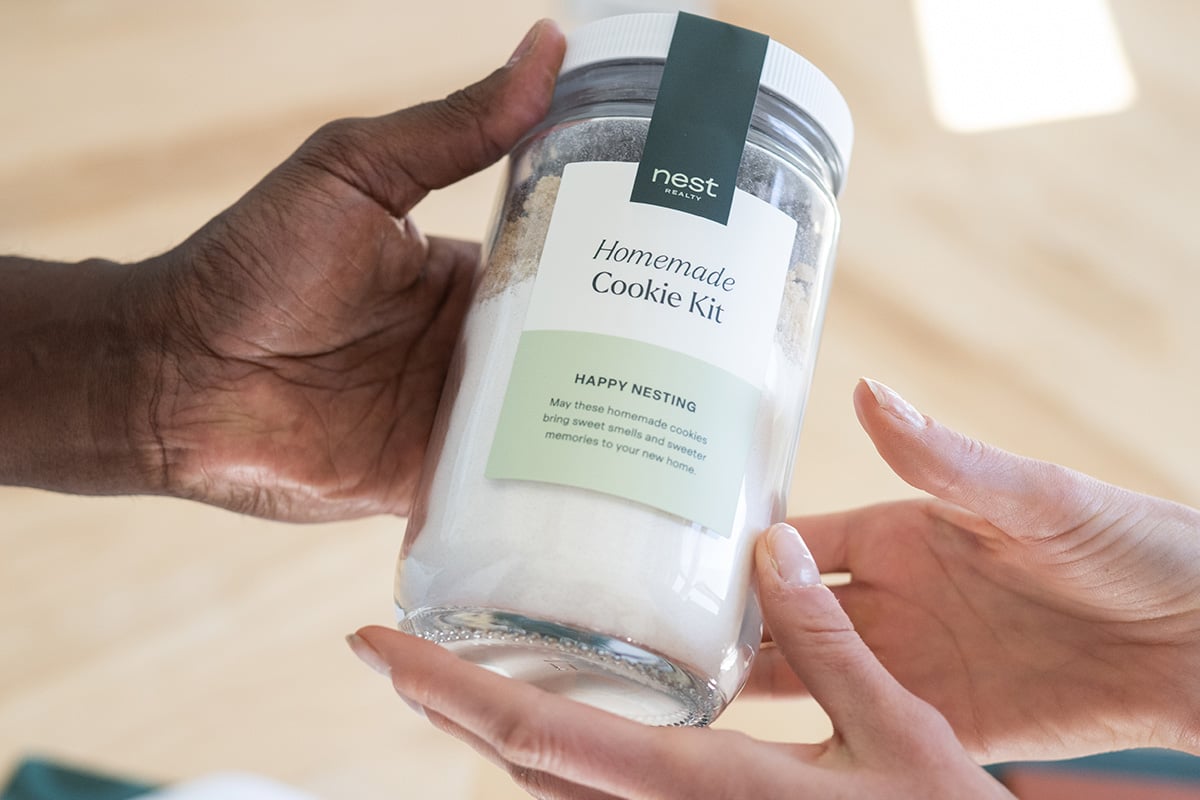
Paigelee: So anytime anybody is hired, either in-house, or as a new agent, we like to send them just a little happy, before they start. And so it’s a cute little box. And then inside, it either has some swag items, like a hat, or a water bottle.
Paigelee: And so, I think our old welcome box has ridden for about two or three years now. And so it’s just time to update it, and we’re excited, because we’re going to start to use some more of our fun elements into it, because I think that it’s a fun facet of our brand. So we don’t have to be as strict and rigid with it. So I’ve challenged that designer with making it as fun as she can. And then we can reel it in if we need to.
Paigelee: So just that whole suite of the box, some packing tape to maybe go on the box, the welcome card that goes with it. And then we’re also revamping all of our templated designs. And so one of the other designers is working on that right now.
Keith: So visually, can I start with that welcome box, and just ask you, when you say, “We want to start with something fun, we want to do this,” are you all beginning with the contents? Are you beginning with the packaging? Are you beginning with the look? What’s the approach on something, in a project like that?
Paigelee: Usually the packaging will come first, because it has to be cohesive all around. And so we’ve developed a cool arrow pattern that we have used. And so I’ve challenged her to try to use that, because the arrows help lead people. And so we want to lead them to where to open the box, or maybe the card, the arrows are leading them to where to open the card. And so I feel like just having those directional arrows help, as a fun design element, but also are very useful. And so by doing the box first, I feel like the box is the hardest thing to design. And so then you can take those little elements used there, and blow them up inside.
Keith: Is there going to be an opportunity to shoot confetti out of the box when you open it?
Paigelee: I was thinking three doves will fly out whenever it is opened.
Jonathan: What about glitter? I’ve heard glitter bombs are the way to, they’re terrible really [crosstalk 00:20:12].
Paigelee: Ugh. But then I feel like they wouldn’t be excited to be at Nest if a glitter bomb exploded.
Jonathan: They’re terrible for the environment too. Nevermind, forget the glitter bombs.
Paigelee: But the doves could work.
Jim: You have to squeeze them in though.
Jonathan: It’s a big box.
Paigelee: Carrier pigeon.
Jonathan: It’s a big box.
Jonathan: What would you tell someone about working here?
Paigelee: It is literally the best place that I’ve ever worked. And I’m not just saying it, because all of you are in the room.
Jonathan: But that doesn’t hurt.
Paigelee: I mean, I just think that it’s a very humane place. We realize that real estate is very important. But at the end of the day, you have a family and a life outside of work, and they are number one. And so even just for me personally, I have three kids and my husband’s a resident, and so I’m a solo mom most of the time. And so-
Jim: Resident of where?
Paigelee: UVA. Fair enough. He’s a surgery resident at UVA.
Jim: That’s because, our vernacular, we all know residency and all that, but-
Paigelee: Right. Nope. Fair enough. And so his hours are crazy, like 5:00 AM to maybe 10:00 PM at night. So I’m a solo mom, I’m at it. And so Nest takes me as I am. If I come in because the morning was ridiculous, and I just need five minutes to myself just to be by myself, they give me that space to do that, and they also give me the space to come up to Jonathan with crazy ideas like a tote bag.
Jonathan: I fought that for probably a year, and then-
Jonathan: People love the tote bags though.
Jonathan: It is awesome, yeah.
Paigelee: Or building a bird out of cardboard, and having my desk littered with different versions of it, and just saying, “Go with it and see what the price is.” So that’s been awesome. I just get to be myself, and be in an environment where people nurture that and support it. And that’s a very rare place to be, I think.
Jonathan: We also appreciate the fact that you took a risk on us coming to a real estate brokerage. Because I think the stigma that we have in this industry is there’s not a lot of creativity. And it’s just in the brokerage world. And so the fact that you took a little bit of risk on us, that you’d come into a spot where we want creativity, and we want crazy ideas like tote bags. It’s crazy. How crazy is that?
Paigelee: Yeah. Tote bags and birds, who would have thought?
Jonathan: Well that’s cool. That’s great.
Jonathan: The pictures of tote bags, pictures of birds. I’m taking notes for things we need to have out there.
Paigelee: Yeah, absolutely. Classes.
Keith: And you’re going to make your worldwide video debut on the gumbo cooking?
Paigelee: Yes.
Keith: We’re going to do that soon?
Paigelee: We get to do fun cooking challenges. So Keith and I have challenged each other to a gumbo cook off.
Keith: Holy trinity throw down. Yep. We’re going to do it. Get Graham, as soon as we get him back full-time.
Jonathan: Excited to see that. One thing we haven’t talked about, that I know you spent a big chunk of your time on, is Nest Magazine. That’s something that’s evolved, I think, tremendously. Are we 10 issues in?
Paigelee: Yeah, we’re starting to work on 11.
Jonathan: We’re working on 11. So 10 issues in, you’ve come in, and have been an integral part of four or five of those. And I think that you came in and really elevated the magazine. Talk to me about, I’d love to hear your thoughts on the magazine, the magazine process. But also, when you come into a project that’s established, like the magazine was a success for us, and how you look at it and say, “Here’s what I want to do, and here’s what I want to do to make it better,” without completely blowing it up.
Paigelee: Right. I love the magazine. So the magazine is fun, because I don’t believe that print is dead. And the cool thing about our magazine is there’s no ads in it. So really everything that’s designed within it is purely just Nest Realty, and our fun design and thoughts.
Paigelee: And I feel like the magazine is one place where I don’t have to fit into the mold of the Nest brand guidelines. So I can actually, I like to use it as my playground for different things that we can use for Nest brand or Nest HQ. But it’s a lot of fun.
Paigelee: I don’t think that it was, it was not broken when I came into it. It was already a really cool thing. And so, it was a fun challenge for me just to see how I could elevate, take it to the next level, make it the next Garden and Gun kind of thing, or make it the next Magnolia Magazine.
Paigelee: And so, being able to be given tha